

Mipletamig
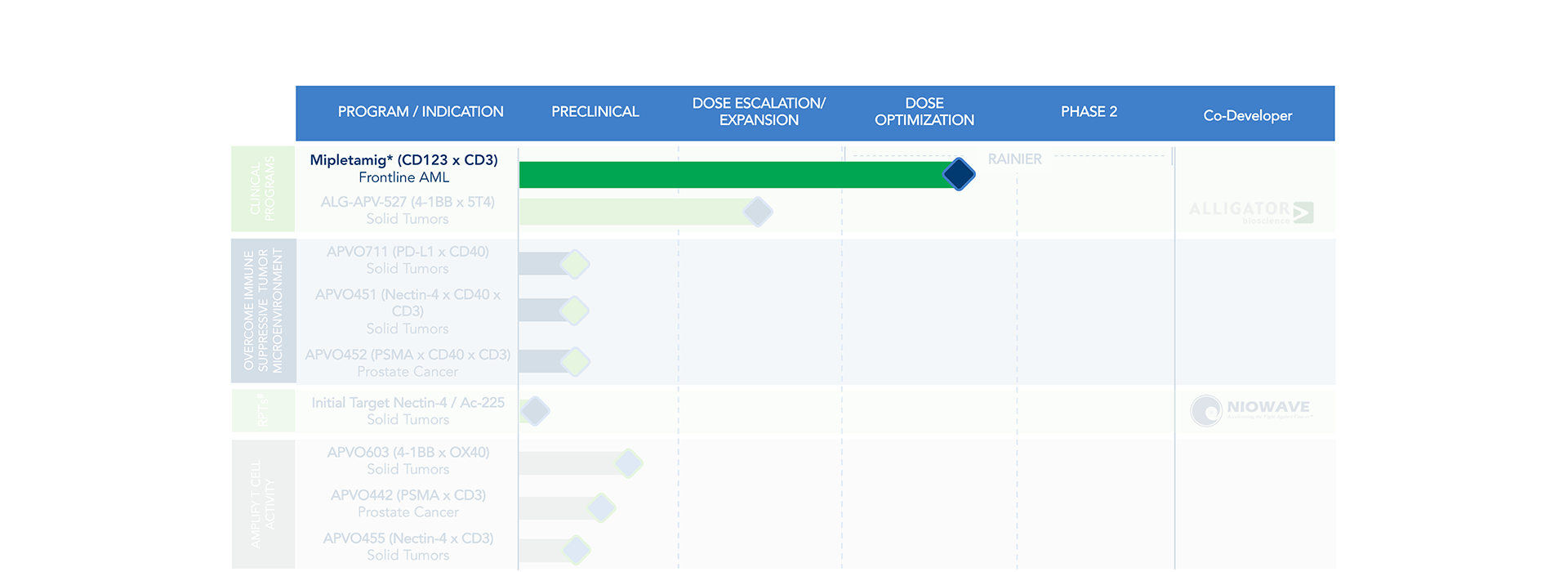
Mipletamig is currently being evaluated in the Phase 1b portion of the RAINIER Phase 1b/2 study in combination with standard-of-care venetoclax and azacitidine for the treatment of frontline acute myeloid leukemia (AML) patients who are unfit for intensive induction chemotherapy.
Progress across three clinical trials has been substantial and provide a credible path into Phase 2 development.
Where we are today
Across our clinical program, more than 140 patients have been treated with mipletamig across in three trials.
On the efficacy side, mipletamig has generated compelling results in frontline AML, including high remission rates and deep responses, with many patients achieving measurable residual disease-negative status. Importantly, activity has also been demonstrated in patients with TP53-mutated AML—one of the most difficult forms of the disease to treat—and multiple patients have been able to proceed to stem cell transplant, a potentially curative treatment option. Mipletamig has also received Orphan Drug designation for AML, recognizing its potential to address the significant unmet needs of patients with limited treatment options.
On safety, mipletamig has demonstrated a favorable and manageable profile in frontline AML, with no cytokine release syndrome (CRS), reported through the first five RAINIER cohorts and infusion-related reactions (IRRs) largely eliminated following refinements to the priming regimen. Both CRS and IRRs are common side effects associated with similar treatments.
Central to mipletamig’s design is Aptevo’s proprietary application of the CRIS-7-derived CD3 binding domain, which is engineered to engage T cells while limiting the risk of systemic cytokine release. This design principle is already showing promise in the clinic: across the first five cohorts of the ongoing mipletamig (CD123 x CD3) RAINIER trial, frontline patients have demonstrated a favorable cytokine release profile—consistent with what preclinical studies predicted.
What’s ahead
Aptevo plans to enter Phase 2 clinical trials with mipletamig in combination therapy for frontline AML, in 1H27.
Monotherapy Data Supports Contribution to the Triplet
Monotherapy Dose Escalation Study in SoC Treatment Relapsed/Refractory Patients
49% clinical benefit rate (19 of 39 evaluable patients: CR, CRi, MLFS, PR or SD; started at a MABEL dose, incremental escalation)
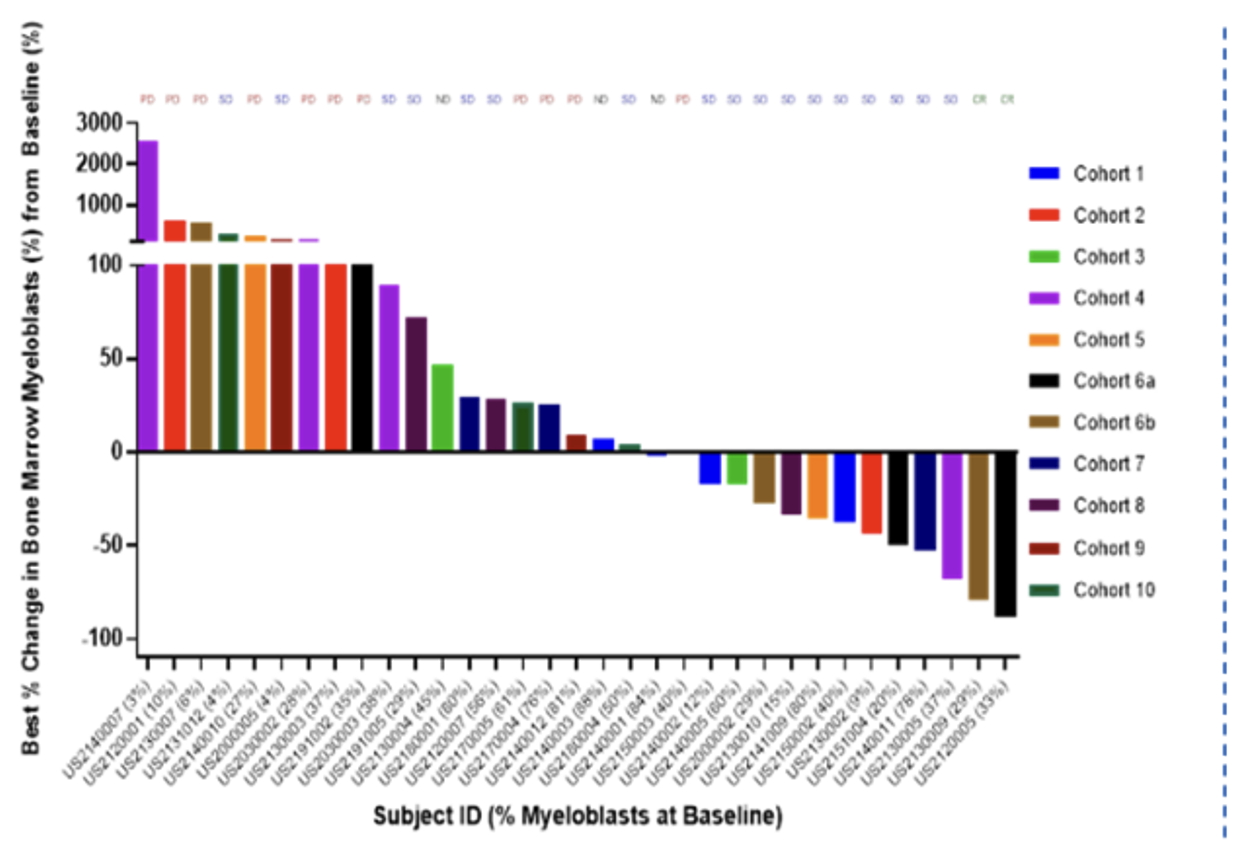
36% of evaluable patients experienced substantial leukemia blast reduction to a clinical meaningful degree compared to baseline, proving the pharmacodynamic effect of the drug
2 complete remissions were observed at the 12 mcg and 18 mcg dose levels where the two largest % reductions in leukemia blast counts occurred
Most CRS cases were during infusion; low-grade & clinically manageable
Single agent leukemia blast reduction
Dose Expansion (monotherapy; cohort 3)
100% clinical benefit rate – of 4 evaluable patients who had AML and were treated with single agent, 1 patient achieved MLFS and 3 achieved SD as their best overall response indicating antileukemic activity.
CRS continued to be low-grade & clinically manageable
Monotherapy study CR = complete remission; Cri = CR with incomplete recovery; MLFS = morphologic leukemia-free state; PR = partial response; SD = stable disease
The results show that mipletamig delivers genuine single-agent activity against acute myeloid leukemia—reinforcing its role within the triplet and Aptevo’s continued advancement of the combination.
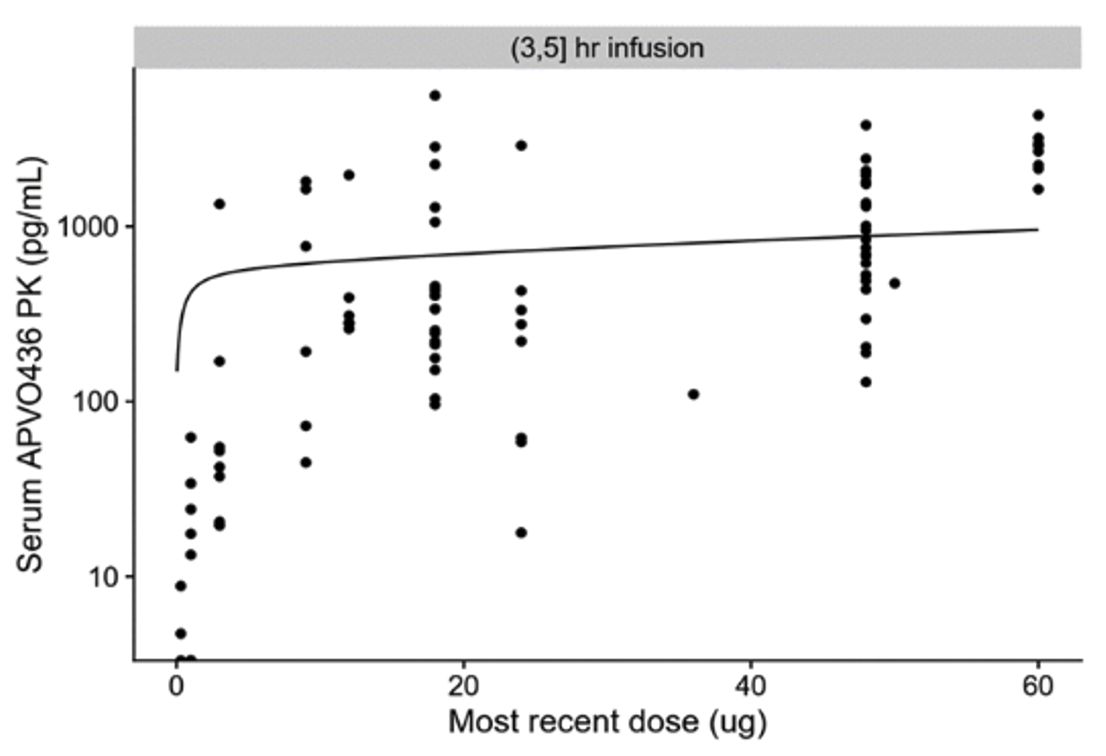
Dose exposure at the end of infusion